handicap · · By Simon Berriman, Founder of Caddie Live
What Is a Good Golf Handicap? Average Handicaps Explained
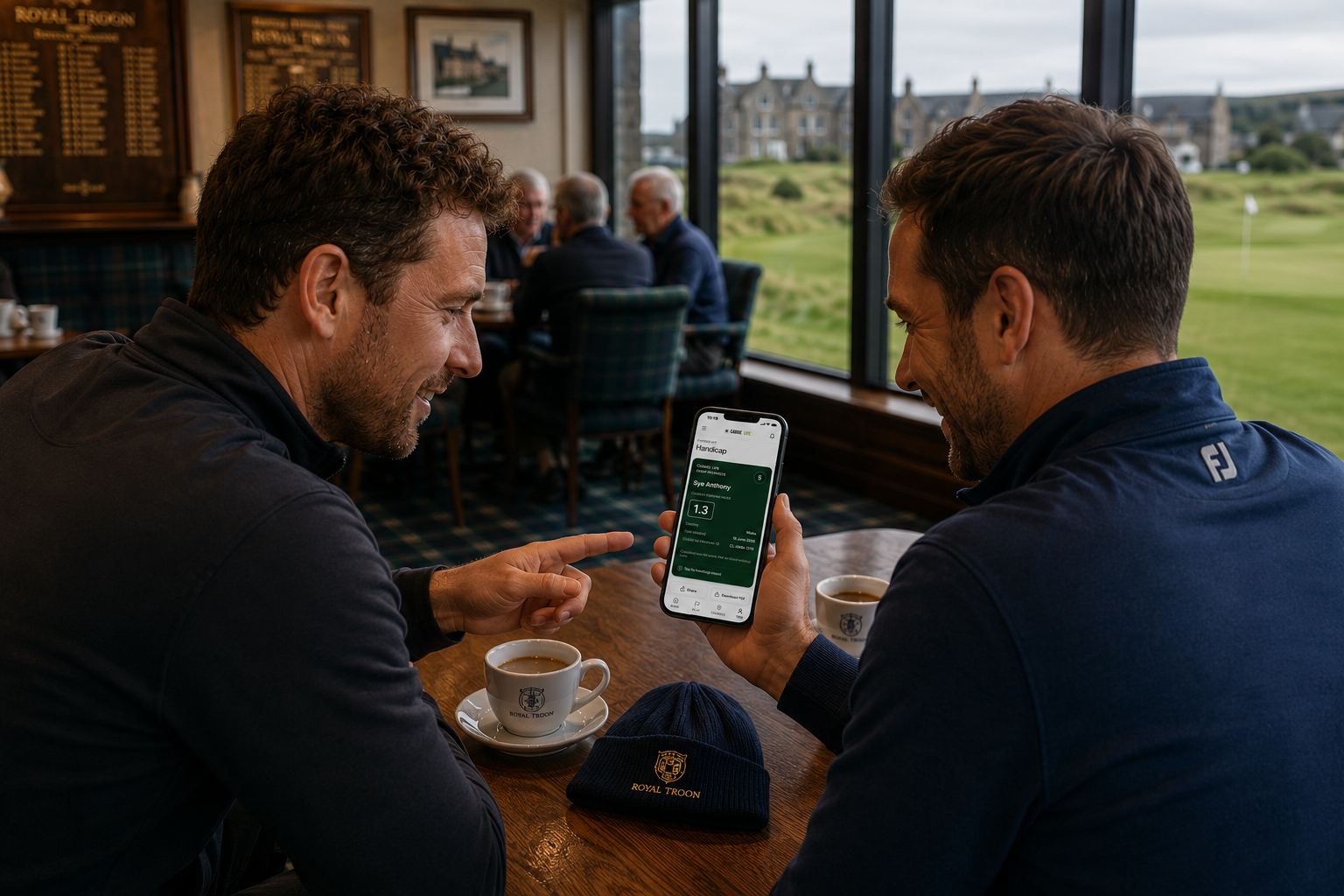
"What's a good golf handicap?" is one of the most-asked questions in the game — and the honest answer is: it depends on who you are and how long you've played. A good handicap for a teenager who practises daily is very different from a good handicap for someone who plays twenty times a year for the fun of it. But there are real numbers behind the question, and knowing where the averages sit is the best way to see where you stand.
This guide gives you the actual figures — for men and women — then explains what genuinely counts as "good," and how to find out where you land.
One thing to know before the numbers
The handicap statistics below come from national bodies like the USGA and England Golf, and they're based on golfers who hold an official handicap. That's an important caveat: this population tends to include more committed and regular players, so it may not represent everyone who plays occasionally — the casual golfer who plays a few times a year likely scores higher than these numbers suggest. Don't be discouraged if you're above them.
If you don't yet track your handicap, our guide to tracking your golf handicap shows how to get started (you don't need to be a club member).
What's the average golf handicap?
In the United States, the USGA reports an average Handicap Index of 14.2 for men and 28.7 for women. In England, England Golf reports an average Handicap Index of 18.60 for men and 29.33 for women across all golfers with an official Index, with an overall average of 19.37. Among golf-club members alone, the averages are slightly lower — 17.38 for men and 28.09 for women.
The difference between countries reflects the golfers included, participation patterns and how each dataset is compiled.
Looking at percentiles makes "good" easier to understand. England Golf reports that only around 1% of golfers have a Handicap Index below 0.4, while around 18% have an Index of 10.4 or better. That makes playing around scratch genuinely exceptional — and a handicap around ten comfortably better than most golfers who maintain an official Index.
Does a good handicap depend on age?
Age can affect how golfers generate speed, recover and practise, but it doesn't create a fixed handicap target. Plenty of older golfers maintain low handicaps through course management, accuracy and a strong short game, while younger players can be limited by experience or inconsistency.
The fairest comparison, then, isn't simply with golfers of the same age. Consider how often you play, how long you've played, the courses and tees you use, and whether your handicap is moving in the direction you want.
So what actually counts as "good"?
Set against those figures, here's a rough scale of what each level represents:
- Around scratch — exceptional. In England, only about 1% of golfers have a Handicap Index below 0.4.
- 10.4 or better — very good. Around 18% of England's indexed golfers reach this level.
- 10.5 to 19.9 — solid club golf. This range includes many experienced and competitive recreational golfers.
- 20 to 29.9 — a common recreational range. It may describe a newer golfer, an occasional player, or simply someone enjoying the game without structuring life around improvement.
- 30 and above — often an early-stage or higher-scoring golfer. The number still allows meaningful competition and leaves plenty of room to see rapid progress.
In traditional club-golf language, reaching single figures is often treated as the landmark for becoming a very good golfer. Statistically, though, even reaching around 10 places you well ahead of most players who maintain an official handicap.
A scratch Handicap Index doesn't mean averaging level par every time, either. Handicap Index measures demonstrated ability based on your better rounds — and USGA guidance says golfers generally play to their target score only around 15–20% of the time.
Want to know where you stand? Record your rounds and Caddie Live builds your CPI Handicap automatically — so you can see your number and how it's trending. [Track your handicap free with Caddie Live →]
The better question: what's a good handicap for you?
Averages are a useful yardstick, but they're not the point. A "good" handicap really means one that reflects real progress for your circumstances — your experience, age, and how often you actually get to play. A once-a-month golfer holding a 20 may be performing extremely well for the time they have available; another golfer with more time to practise may set a lower personal target.
The most useful benchmark isn't the national average — it's your own last few months. A handicap that's trending down is the clearest sign you're getting better, whatever the number says.
That's exactly why tracking matters. Recording your rounds turns a vague sense of "am I improving?" into a number you can watch move — and shows you where you're leaking shots so you can do something about it. When you're ready to bring it down, our guide to lowering your golf handicap covers the practical steps.
Quick answers
- What's the average golf handicap? About 14.2 for men and 28.7 for women in the US (USGA); in England, 17.38 (men) and 28.09 (women) among club members (England Golf).
- What's a good handicap? Reaching single figures is the traditional landmark; around 10 or better already puts you ahead of most golfers with an official Index. Scratch is exceptional (~1%).
- Is a 20 handicap good? It represents capable recreational golf and gives you a realistic chance to compete in net formats. It sits reasonably close to the overall England average and is a perfectly respectable level for an occasional or developing golfer.
- What should a beginner expect? New golfers can start across a very wide range — some in the twenties, others in the thirties or above — depending on previous sporting experience, coaching, course difficulty and how often they play.
However you compare, the number that matters most is your own, moving in the right direction. Start tracking it and you'll always know exactly where you stand — and have something to beat.
Running a golf day?
Create your event free in Caddie Live and score it live. Create your event free